Remote QA vs In-House QA: A Data-Driven Comparison for Startups
Should you hire in-house QA or use a remote QA team? Compare cost, time-to-hire, scalability, and coverage to make the right decision for your startup.
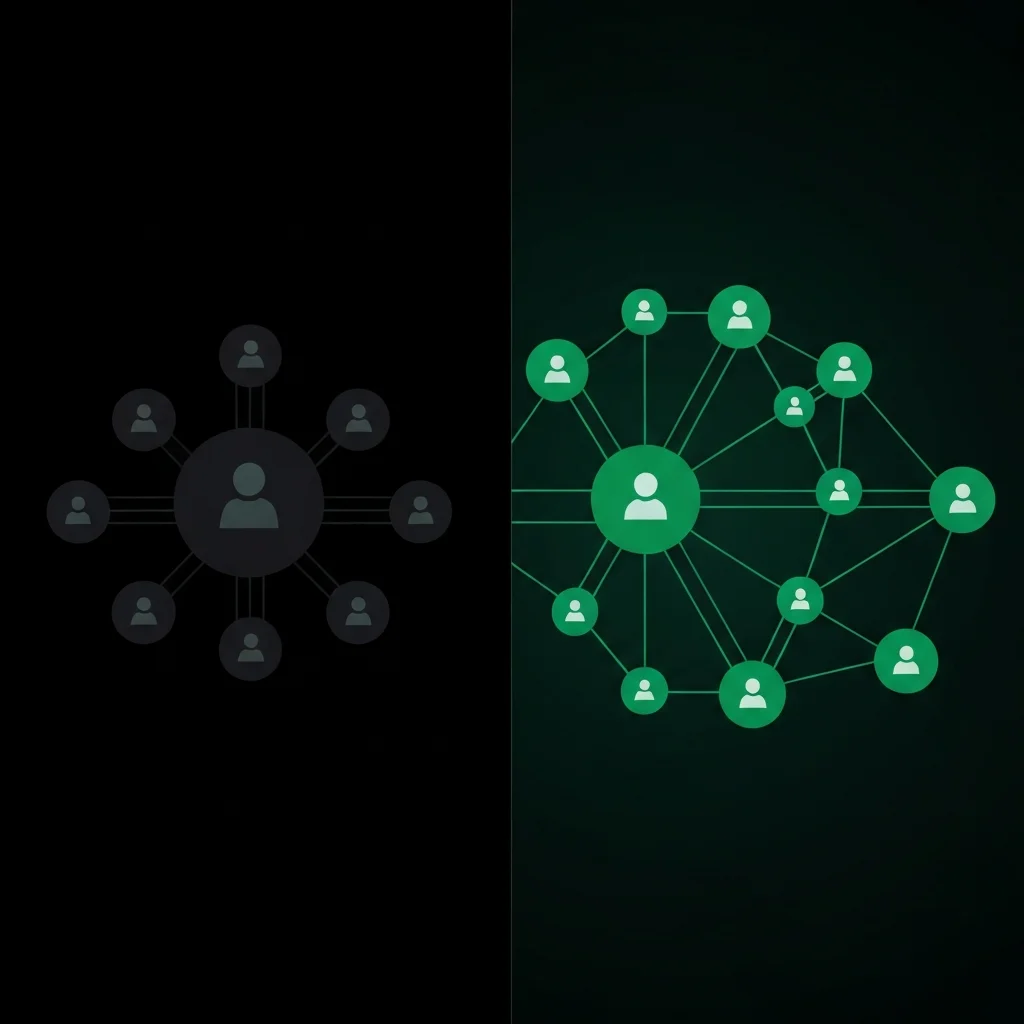
Remote QA or in-house QA? This is one of the most consequential quality engineering decisions a startup makes, and it’s rarely analyzed rigorously before a choice is locked in. Most companies default to whichever model their founder is most familiar with — and then spend 18 months either frustrated by communication overhead or trapped by in-house hiring costs that don’t scale.
This guide provides a direct, data-driven comparison of remote QA teams vs in-house QA engineers across the dimensions that matter most for startups: cost, time-to-hire, scalability, quality coverage, and team continuity. The goal is not to advocate for one model — it’s to help you identify which is right for your specific situation.
The Core Question: What Problem Are You Solving?
Before comparing models, clarify what you’re actually trying to accomplish:
- Do you need test coverage fast to support a release deadline or fundraise?
- Do you need specialist depth (performance testing, accessibility, mobile)?
- Do you need continuous QA embedded in every sprint?
- Do you need a long-term quality program with institutional knowledge?
Your answer to these questions shapes which model makes sense. We’ll return to this at the end. For now, let’s compare the models head-to-head.
Cost Comparison
In-House QA Engineer: True Cost
When startups calculate the cost of an in-house hire, they typically look at base salary. The true cost is significantly higher:
Dubai / UAE market (2025–2026):
- Mid-level QA Engineer: AED 12,000–18,000/month base salary
- Senior QA / Automation Engineer: AED 18,000–28,000/month
- QA Lead: AED 25,000–40,000/month
True cost multipliers:
- Employer payroll costs (GOSI where applicable, health insurance, visa sponsorship, flight allowance): +25–35%
- Equipment (laptop, licenses, tools): AED 8,000–15,000 upfront
- Management overhead (recruiting, onboarding, performance management): 15–20% of total comp
- Office space allocation: AED 1,500–3,000/person/month
All-in monthly cost for a single mid-level QA engineer in Dubai: approximately AED 18,000–27,000 (USD 4,900–7,350), plus AED 8,000–15,000 first-month onboarding cost.
For a 3-person QA team (QA engineer, automation engineer, QA lead), the all-in monthly cost typically runs AED 70,000–110,000 (USD 19,000–30,000).
Remote QA Team: Cost Structure
Remote QA providers typically price on a monthly retainer model tied to team size and engagement scope. The cost structure varies significantly by provider location and AI tooling investment:
What you’re paying for with a managed remote QA provider:
- QA engineer time (multiple engineers, not just one)
- Automation infrastructure and tooling licenses
- QA lead oversight and quality management
- AI pipeline setup and maintenance
- Test documentation and knowledge management
- Escalation and incident support
The key cost advantage is that you’re paying for output and coverage, not for a headcount seat that includes benefits, visa costs, equipment, and management overhead.
For equivalent coverage — 2 QA engineers plus automation tooling plus QA leadership — remote QA typically costs 50–70% less than the in-house equivalent in a GCC or Western market, when the full true cost of employment is calculated.
Three Cost Scenarios
Scenario A: Seed-stage startup, 3 engineers, shipping weekly
In-house QA hire: 1 junior QA engineer, AED 15,000/month base + overhead = ~AED 21,000/month all-in. Limited to functional testing; no automation capability.
Remote QA: QA Sprint Team with 2 engineers and AI tooling. Higher test coverage, automation from day one, no visa/equipment cost.
Scenario B: Series A startup, 12 engineers, fortnightly releases
In-house: 2 QA engineers + 1 automation engineer = approximately AED 75,000–90,000/month all-in. Good coverage but a 90-day hiring timeline.
Remote QA: Managed QA with a 3-person team embedded in two squads. Faster deployment, broader specialist access, AI-augmented coverage.
Scenario C: Series B, 40+ engineers, 5 squads
In-house: QA team of 6–8 required for meaningful coverage = AED 180,000–280,000/month all-in. Management complexity increases significantly.
Remote QA / hybrid: QA Center of Excellence model — remote QA squad with SLA, plus potentially one in-house QA lead for stakeholder management. Significant cost efficiency at scale.
Note: We don’t publish specific remote.qa pricing in this post — our pricing depends on team size, scope, and engagement model. Contact us for a detailed proposal.
Time-to-Hire and Time-to-Coverage
In-House QA: The Hiring Timeline
The average time-to-hire for a QA engineer in Dubai and GCC markets is 45–90 days from job post to offer acceptance. After that:
- Visa processing (if the candidate is overseas): 4–8 weeks
- Notice period at previous employer: 1–4 weeks
- Onboarding and environment setup: 1–2 weeks
- Productive ramp-up time (understanding the product, codebase, and test strategy): 4–6 weeks
Realistic time from “we need a QA engineer” to “engineer is shipping test cases”: 3–6 months.
For a startup with a release deadline in 6 weeks, this timeline is simply not viable.
Remote QA: Time-to-Coverage
A well-structured remote QA provider can move from contract signature to embedded team in 3–5 business days. The provider handles:
- Team selection from existing vetted engineers
- NDA and access provisioning
- Environment setup (staging credentials, CI/CD access, test management tool)
- Product discovery and onboarding kickoff
Realistic time from contract to first test cases shipped: 5–10 business days.
For exploratory testing and manual QA coverage, a remote team can deliver a first full regression run within a sprint.
For automation setup, expect 2–3 weeks to have a foundational CI-integrated test suite, depending on the complexity of the product and state of existing automation.
The time-to-coverage gap is significant: 3–6 months in-house vs. 1–2 weeks remote. For startups operating in fast-moving markets, this difference has direct business impact.
Scalability
In-House QA: Fixed Cost, Linear Scaling
In-house QA teams are largely fixed costs. Each additional QA engineer is another hire cycle, another onboarding cost, another management relationship. Scaling up for a major release takes months. Scaling down during a slow period means difficult conversations about utilization.
The utilization problem is real. A senior QA engineer hired to support a major product launch may have 40% utilization in the steady state between releases. You’re paying full salary for partial productivity.
Specialisms are particularly expensive in-house. Hiring a dedicated performance engineer or accessibility specialist full-time is only justified at significant product scale. Most startups either skip these specialisms entirely or pay a high per-engagement rate for freelance specialists.
Remote QA: Variable and Elastic
Remote QA teams can scale up and down with your release calendar. A managed QA provider can add a third engineer for a major release sprint and return to a two-person team afterward. Specialist coverage — a mobile QA engineer for an iOS launch, a performance tester for a capacity planning exercise — can be added for specific engagements without permanent headcount.
This elasticity is particularly valuable for:
- Startups with uneven release cadence (a big launch every quarter, steady-state sprints in between)
- Products with seasonal usage spikes that require load testing at specific intervals
- Teams adding new platforms (mobile, API, new browser targets) that require specialist skills
Quality and Test Coverage
The Coverage Depth Question
A common concern about remote QA is whether a distributed team can match the product knowledge and institutional memory of an in-house engineer who sits in your stand-ups and overhears product conversations.
This concern is valid in the staff augmentation model but largely mitigated in a well-structured managed QA engagement. The key factors:
Documentation discipline. Remote QA teams that work across multiple products develop strong documentation practices out of necessity. Test cases, test plans, and coverage reports are explicit artifacts — not knowledge that lives in someone’s head.
Sprint integration. The best remote QA providers embed engineers into your sprint ceremonies — stand-ups (async or live), sprint planning, retrospectives. Engineers who participate in planning develop the same product understanding as in-house team members.
Knowledge accumulation over time. A remote QA team that has worked with your product for 6 months typically has better institutional knowledge than an in-house engineer hired 6 months ago, because the team structure provides continuity that individual employment does not.
Specialist Coverage
The coverage argument most strongly favors remote QA in the specialist dimension. Most startups cannot justify full-time specialist hires for:
- Accessibility QA (WCAG 2.2 compliance, assistive technology testing)
- Performance and load testing (k6, Locust, capacity modeling)
- Security-adjacent testing (OWASP Top 10, authentication flows, API security)
- Mobile QA (real device testing on iOS and Android device farms)
- AI/ML QA (LLM evaluation, model validation, bias testing)
Remote QA providers can staff these specialists for specific engagements. An in-house team typically covers none of them.
Team Continuity and Knowledge Retention
The Attrition Risk
In-house QA engineer attrition is a significant risk that’s rarely factored into cost comparisons. Senior QA engineers in the UAE and GCC market receive frequent competing offers; mid-level engineers are highly mobile. When a QA engineer leaves:
- All institutional knowledge about edge cases, known issues, and undocumented behavior goes with them
- The test suite they built may be inadequately documented
- You restart a 45–90 day hiring cycle
- The ramp-up period repeats
For a 1–2 person in-house QA team, the departure of a single engineer can disrupt QA coverage for an entire quarter.
Managed QA: Team-Level Continuity
Managed remote QA providers mitigate attrition risk through team-level ownership. The test suite, documentation, and institutional knowledge belong to the engagement, not to individual engineers. When an engineer rotates off, their replacement is onboarded against the existing documentation, not from scratch.
The best providers also maintain explicit knowledge management practices: test plan wikis, regression suite documentation, known issue logs, and environment runbooks. This is the structural advantage of a professional services model over a single-hire model.
When to Choose In-House QA
Despite the advantages of remote QA in most startup scenarios, in-house QA is the right choice in specific circumstances:
1. You need a QA leader, not just QA capacity. If you’re building an internal quality engineering culture, you need a QA lead or VP of Engineering with QA focus who owns quality strategy, builds the team, and is embedded in your leadership. Remote QA augments this role; it doesn’t replace it.
2. Your product handles data that can’t leave a specific environment. Some regulated products — certain financial services, healthcare data with HIPAA implications, government-adjacent systems — have data access constraints that make any remote or third-party access complicated. In these cases, in-house QA with rigorous access controls is the pragmatic choice.
3. You’re post-Series B with 20+ engineers and sufficient budget. At scale, a hybrid model often makes the most sense: an in-house QA lead for organizational alignment and quality culture, augmented by a remote managed QA team for execution capacity and specialist coverage.
4. Your product requires deep domain expertise that takes 12+ months to develop. In some verticals — highly specialized fintech infrastructure, complex enterprise software with domain-specific edge cases — the product knowledge depth that comes from full-time embedded QA is genuinely hard to replicate remotely.
When to Choose Remote QA
Remote QA is almost always the better choice for:
Early-stage startups (seed to Series A): Speed of coverage, cost efficiency, and access to specialist depth all favor remote QA when budget is constrained and time-to-market is paramount.
Teams that need to move faster than hiring allows: If your release deadline is sooner than your hiring timeline, remote QA is the only viable path.
Products requiring specialist QA coverage: Mobile, performance, accessibility, AI/ML — any product requiring specialist testing that doesn’t justify a full-time in-house hire.
Globally distributed engineering teams: If your engineers are already remote across multiple time zones, a remote QA team is the natural model. Follow-the-sun testing becomes a genuine productivity advantage.
Companies expanding to new platforms: Launching an iOS app when your team has only built web? Adding an API product to a monolith? Remote QA provides specialist coverage without headcount expansion.
The Hybrid Model
The most mature answer for many companies is not a binary choice. A QA Lead or Head of Quality owns quality strategy, culture, and stakeholder relationships in-house. A remote managed QA team provides execution capacity, specialist depth, and AI-augmented coverage at scale.
This hybrid model combines the organizational alignment of in-house leadership with the cost efficiency and elastic capacity of remote QA. Many of remote.qa’s most successful client engagements operate in this model: an in-house QA lead setting direction, with a remote squad executing against it.
Making the Decision
Use this framework to make the right call for your situation:
| If… | Choose… |
|---|---|
| Release deadline < 3 months | Remote QA |
| Budget < AED 25,000/month for QA | Remote QA |
| Need specialist coverage (mobile, perf, a11y) | Remote QA |
| Team is already distributed / remote | Remote QA |
| Series B+, need QA culture and leadership | Hybrid |
| Data access constraints prevent third-party access | In-house |
| Post-Series B, building internal engineering org | Hybrid or in-house |
Getting Started
If you’re leaning toward remote QA and want to validate whether it’s the right fit for your product and team, the most low-risk path is a scoped discovery engagement.
At remote.qa, we offer a QA Coverage Audit — a 3-day assessment that maps your current test coverage, identifies the gaps most likely to produce production defects, and produces a prioritized roadmap with a recommended QA model. It’s a low-commitment way to test whether our team understands your product and can deliver value.
Most clients who complete the audit move to a QA Sprint Team or Managed QA engagement. Some discover they have more coverage than they thought and just need help prioritizing automation. Either outcome is worth knowing.
Talk to us about your QA setup and we’ll give you an honest recommendation — even if it’s not remote.qa.
Ship Quality at Speed. Remotely.
Book a free 30-minute discovery call with our QA experts. We assess your testing gaps and show you how an AI-augmented QA team can accelerate your releases.
Talk to an Expert